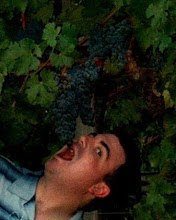
I was watching the Olympics last night when I realized wine is like the Olympics!
To me, wine ratings are like the Olympics, specifically the medals. I'll explain.
First, a quick explanation about ratings for wine. There are many wine raters and almost all of them use a scale up to 100 points. In some cases the rating is given by just one person. In others, it could be a panel of people and their ratings are averaged. A perfect wine (100 pts.) is rare, but it happens. If they are rated, most good to great wines fall between 85-99. That should help with my thoughts below.
Here's my comparison:
Gold Medal = 95-100 pt. wines
These wines are outstanding by most accounts. They have everything going for them: grapes sourced from excellent vineyards, meticulously cared for in the cellar, and are generally smaller production.
Silver Medal = 90-94 pt. wines
90 points, for some reason, appears to be the threshold for what the wine world calls great wines. Most of these wines you and I would drink on a special occasion. They also represent wines that for some of us may be the best we taste....ever.
Bronze Medal = 85-89 pt. wines
For the most part, wines in this category are good everyday drinking wines. By our (mine, yours) account, some are nothing special, some are outstanding. I think it's the most overlooked category for great value.
Now that the basis is set, I'll go further.
Usually, I don't care a lot about wine ratings. To me, these ratings only add or detract from the real wine behind them. The ratings are a snapshot in time of how the wine tasted on that one day by that one person (or panel). Often this tasting happens long before the release of the wine. On a different day, the result could be a rating higher or lower.
To the same respect, medals from the Olympics and the medals awarded are just a snapshot of the best athletes at that moment in time. On another day, it could have been another athlete. Maybe not, but it could have been.
So what's important to me? Of course, I want the wine to taste good. Otherwise, why drink it? Beyond that, what I care about is the story behind the wine. Where did the grapes come from? What was the weather like during that year? How were the grapes processed through the winery? What barrels were used? Etc... I want to know the wine in all its aspects.
Along the same lines, what I look forward to when watching the Olympics are the stories behind the athletes. The struggles they've been through to get there and the injuries they have overcome are all part of what make the medals they win valuable.
Do wine ratings help sell wine on a shelf? Absolutely. Is that all that matters? Not by a long shot.
Next time you open a bottle of wine, look it up and see where it came from. You may just learn the story behind it and you might enjoy it that much more.
Cheers!
Tuesday, February 16, 2010

Friday, February 12, 2010
Alcohol
Today I'm going to dive into the subject of alcohol and wine. This is a daunting task as there are many theories on this topic. I have some pretty strong feelings and so do the "experts". We'll start with alcohol in general, then move into California vs. France and finally finish up with balance.
Simply put, alcohol is derived from fermenting the sugar in the grapes with some yeast. If the winemaker chooses to ferment all the sugar out then the reasoning goes: the higher the sugar, the higher the alcohol percentage. You can get alcohol out of just about anything that has sugar in it. One of my other favorite adult drinks is whiskey. I like all types from all areas, but Irish is consistently my pick. The alcohol in these drinks is typically 40% or higher. Maybe that's why I'm not scared when a wine label states 15%, 16% or higher - not uncommon in todays wine world.
Alright, let's talk about California vs. France. There are some big differences between these two highly regarded wine regions, but the main one is France's growing areas are significantly more northerly than those in California. The further north, the less sunlight which leads to less photosynthesis which means it takes many more days for the same grapes, say Merlot, to come to full ripeness. Confused?
Let's try it another way: The latitude for Sonoma County is roughly 38 degrees N. For Bordeaux, France it's roughly 44 degrees N. Considerable difference? You betcha. Take a square foot of soil in Bordeaux and compare it to a square foot of soil in Sonoma and the one in Sonoma receives more sunlight every year just based on sun angle alone. More sun equals more heat which in turn means the grapes come to full ripeness sooner.
How does this relate to alcohol? When there's less heat, the sugar levels are generally lower which leads to lower alcohol levels. To the same respect, when there is more heat sugar levels are higher which means higher alcohol levels.
Why do we care? Because if a wine isn't balanced nothing else matters.
Balance occurs only when the vineyard manager(s) and winemaker(s) are working very well together. You see, there is much more to picking grapes than just sugar level. There is also acid, tannin and pH among other factors. All of these things need to be in "balance" in order for the resulting wine to be balanced. In some cases this can be a one to two day period in the vineyard.
When a wine is not balanced and has a very high alcohol level, you will know it right away. The sides of your tongue will burn from the moment the wine hits your mouth. Not a good sign at all. Sure, over time, that characteristic may fade, but the wine will never be balanced.
But if everything is done perfectly, the alcohol level could be quite high for instance 16.5% and you won't smell or taste it. That is balanced.
There is one down side to high alcohol that was recently talked about in an article by Dan Berger in the Press Democrat. In this article, Berger stated that higher alcohol levels meant that the wines couldn't age nearly as long as if they had lower levels. To the average wine consumer this doesn't really matter. Most wines are bought and consumed within a few hours. So the majority of people won't age that wine anyway.
The bottom line when drinking wine is that you enjoy it. So, should you care about the alcohol level? Sure. But is it the only thing to concern yourself with? Not a chance.
Cheers!
Thursday, February 11, 2010
Two-lane roads
I've been fighting a nasty cold all week, so I haven't been drinking any wine - a real bummer. As a result, tonight's posting will focus on wine country rather than wine and food.
I'm a driving enthusiast. Of course, you wouldn't know it by my current vehicle, although it is the sports car of minivans. One of my past careers was in the car business. During that time, I was able to experience many great cars and some of them I was actually able to take out and drive - if you know what I mean. It was completely thrilling for me.
One of the things I love about Sonoma County is that almost all the roads are two-lane roads. In fact, there are only two roads I can only think of that have more than two lanes. Two-lane roads (like the one pictured below) just seem to say, "take it easy, roll the window down, enjoy the countryside" and so much more.

I feel a sense of nostalgia when I'm driving on these roads. It reminds me of a time when life moved at a slower pace, when people used to wave and smile at each other driving down the road. Not because they knew each other, but because it was the polite thing to do.
But today, things are different. If you're not going 5-10 miles per hour over the speed limit, there's someone tailgating you impatiently waiting for you to move over or looking for an opportunity to pass. I guess it's what we get with our instant gratification society.
Think about it, how often do you make a facebook posting and check back two minutes later to see if anyone responded? Or how many of you pace in front of the microwave? We want instant results. We want everything to go fast.
I admit I have my moments of impatience. Like when I'm driving in a 55 and the person in front of me is going 40. It's frustrating for sure. But most of the time I drive around with no music playing and the sunroof open - just taking in the sights and sounds.
This is stunningly beautiful country that we live in. When you're on a two-lane, take it slow, turn the music down and cell phone off (or at least on vibrate) and just enjoy. Maybe even wave or smile at people as you pass them. It just might change your whole perspective.
Monday, February 8, 2010
The Super Bowl
I'm not a big football fan. I never really have been. Sure, I know some key names, know how the game is played and can get into it when it's called upon me. But if I miss the 'big' game I won't be disappointed.
However, this year we were invited to a Super Bowl party which made the game not only a game, but a social event too. And what happens at social events? We drink wine! And eat lots of food. Now this sounds like fun.
Here's what I brought to the game.... For starters, we opened the Tandem Pinot Noir, 2006 Sonoma County. It was typically light, but did not disappoint on the nose or palate. Pinot loves cool climate and lots of fog and wind (sounds a lot like Chardonnay). When it's grown in colder climates, generally the result is more earth and less fruit. I like my Pinot Noir earthy, not fruity. This one was all barnyard and forest floor and made for a perfect sipping wine while dining on pre-game food.
We also opened up a 2006 Matanzas Creek Syrah, Sonoma County and an 05 Quivira Grenache. Both we're bigger, bolder wines with tons of fruit and character. In my opinion, these bigger, bolder wines were the perfect pairing for the Super Bowl. After all, is there a bigger game in the season than the Super Bowl?
Game day foods included chips and dips, chicken wings and bread bowls filled with homemade chili. All the wines worked well with the food, but the Syrah and the chili seemed to be the best pairing.
I know what you're thinking, "shouldn't you be drinking beer on game day?" But I'm not a beer drinker and never have been. Guinness is my beer of choice when I do drink it, but wine is generally my drink of choice.
The game is over now (and the social event is too), but maybe I'll look forward to the Super Bowl next year to see if I can better the pairings. But for now, I'm content.
Cheers!
Friday, February 5, 2010
Culinary coma....
Tonight we celebrated my father-in-law's birthday and now I'm in a culinary coma. I'll take you through what we ate and drank. It was outstanding!


I'm now going to retire for the evening and let the coma fully kick in. Until next time.....Cheers!
We had three wines that we paired tonight. A Stonestreet Chardonnay, a Limerick Lane Old Vine Zin and a VJB Barbara Port. All three were very tasty.
First, we started with our cooking wine....that is, wine to drink while we're cooking - the Stonestreet Chardonnay.

We also had some Vella Dry Jack to pair with it. Yummy!
Next, we moved onto the main course: Pork tenderloin cooked in Merlot with shallots and garlic, string beans with almonds and Yukon Gold mashed potatoes. We also had some homemade French bread.

This paired perfectly with the 2005 Limerick Lane Old Vine Zinfandel. The vines (and winery) are in Eastern Russian River Valley and are dry farmed.
Dry farmed means they use no irrigation at all. This can be quite difficult, especially in years of drought and very hot summers. But in the best years the grapes can be outstanding, like this one.
The final course was dessert, of course. My wife made this amazing triple chocolate tart with Bailey's Irish Cream sauce. For this, we pulled out the 2005 VJB Barbara Port. Port and chocolate are one of life's little pleasures that you need to experience. Really.
I'm now going to retire for the evening and let the coma fully kick in. Until next time.....Cheers!
Thursday, February 4, 2010
Chardonnay and cool weather....it's a perfect pairing.
We'll start today's blog with a picture I took this morning....

Chardonnay is tricky. It's a grape that really likes cool, coastal, foggy and windy climates. However, most of California's Chardonnay is not grown in this type of climate. Really, only the best ones are. This, of course, is my opinion, although there are some facts behind it.
For starters, if Chardonnay grows in cooler climates, it will retain a higher acid. As a result, when and if the wine goes through secondary malolactic fermentation the finished product does not taste like butter or have the texture of butter. For me, a buttery wine, especially one that tastes like butter, is not a good thing. I look for more of a creamy quality.
If you don't know, Malolactic fermentation is a process where malic acid (think green apple or salt and vinegar potato chips) that naturally occurs in the grapes is converted into lactic acid (think milk, cream or butter).
 Cheers!

Chardonnay is tricky. It's a grape that really likes cool, coastal, foggy and windy climates. However, most of California's Chardonnay is not grown in this type of climate. Really, only the best ones are. This, of course, is my opinion, although there are some facts behind it.
For starters, if Chardonnay grows in cooler climates, it will retain a higher acid. As a result, when and if the wine goes through secondary malolactic fermentation the finished product does not taste like butter or have the texture of butter. For me, a buttery wine, especially one that tastes like butter, is not a good thing. I look for more of a creamy quality.
If you don't know, Malolactic fermentation is a process where malic acid (think green apple or salt and vinegar potato chips) that naturally occurs in the grapes is converted into lactic acid (think milk, cream or butter).
The higher acid of cool climate Chardonnay also adds to the age-ability of the wine. I know what you're thinking, "age a white wine?" If the conditions are right and the quality of wine is great, you can absolutely age a white wine for a significant time - sometimes 10 years or more.
The wine pictured below is a cool climate Chardonnay from the southern part of Sonoma, Los Carneros. During the growing season, Carneros has warm days, cool nights, plenty of fog and a wind that sometimes is very strong. All these weather conditions come together to make awesome Chardonnay grapes.

We paired this wine with some lemon pepper pasta (Trader Joe's) and homemade sourdough garlic bread. The acid in the wine worked perfectly with the lemon and olive oil from the pasta. The garlic gave it a little bite, but it was subdued by the butter on the bread.
So before you open that next bottle of Chardonnay, think about where it's from and what the weather is like there. Likely, the cooler the climate, the better the Chardonnay will be.
We'll finish tonight's blog with a picture of a vineyard in Carneros I took this morning....the mustard is out!
Cheers!Tuesday, February 2, 2010
Sweet wine....
One of my wine passions is sweet dessert wine. Late harvest ones have typically been my favorite, but occasionally I'll indulge in a port.
Sweet wines are often misunderstood. It's not until they've been aged for a while that they show their true character, but the problem is most consumers don't wait long enough. But even if you don't, they can be fabulous.
The question is what do you pair them with? Well, I have several answers to that - it just depends. But first let's dive into a little about how they are made.
Dessert wines can be made in many different ways, but the most common are late harvest and fortified.
Late harvest is when you leave the grapes on the vines for longer than would be usually normal. In great years botrytis (a good mold) forms on the grapes and concentrates the sugars by removing some of the water from the grapes. The result is a very high sugar content and, even if you wanted too, you wouldn't be able to ferment all the sugar out. What you're left with is residual sugar and low alcohol.
Fortified is when you harvest the grapes at a typical sugar level, ferment and then add alcohol (like Brandy) to the wine to arrest fermentation. The result is higher alcohol (because you added some) and residual sugar.
Phew, now that that's out of the way. On to some pairings.
Of course, some of the best ones don't require any food at all. Just a nice sipping wine after dinner. The bottle of choice for tonight's indulgence? Clos Du Bois' Fleur. It has intriguing honeycomb and pear aromas with a palette of several different kinds of apples.

Go ahead....give one a try.
Cheers!
Sweet wines are often misunderstood. It's not until they've been aged for a while that they show their true character, but the problem is most consumers don't wait long enough. But even if you don't, they can be fabulous.
The question is what do you pair them with? Well, I have several answers to that - it just depends. But first let's dive into a little about how they are made.
Dessert wines can be made in many different ways, but the most common are late harvest and fortified.
Late harvest is when you leave the grapes on the vines for longer than would be usually normal. In great years botrytis (a good mold) forms on the grapes and concentrates the sugars by removing some of the water from the grapes. The result is a very high sugar content and, even if you wanted too, you wouldn't be able to ferment all the sugar out. What you're left with is residual sugar and low alcohol.
Fortified is when you harvest the grapes at a typical sugar level, ferment and then add alcohol (like Brandy) to the wine to arrest fermentation. The result is higher alcohol (because you added some) and residual sugar.
Phew, now that that's out of the way. On to some pairings.
With late harvest Riesling, I like creme brulee and fruit based desserts: apple pie, apple crisp, pear tarts, fruit tarts, etc... But my favorite thing to do is to make a reduction with the wine and peaches, then pour it over vanilla ice cream....yum!
With port wines, I make a reduction using raspberries and blackberries and then there are many options. Appetizer - sourdough baguette, some triple cream brie and drizzle some of the reduction over it. Main course - grilled pork chops with just a little grill seasoning and pour the sauce over the chop. Dessert - take the same reduction and pour it over a chocolate torte....it's amazing!Of course, some of the best ones don't require any food at all. Just a nice sipping wine after dinner. The bottle of choice for tonight's indulgence? Clos Du Bois' Fleur. It has intriguing honeycomb and pear aromas with a palette of several different kinds of apples.
Go ahead....give one a try.
Cheers!
Subscribe to:
Posts (Atom)